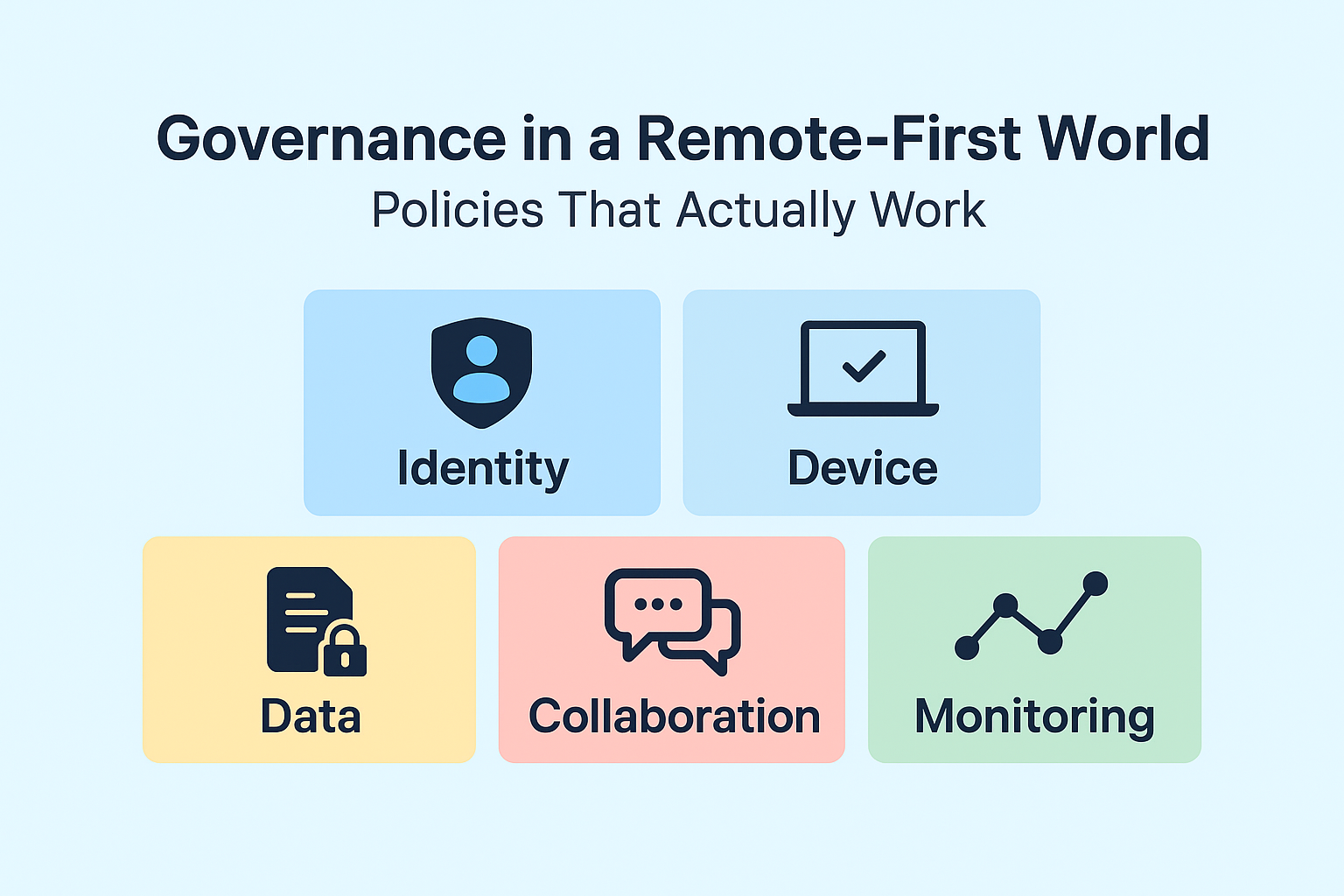
Governance in a Remote-First World: Policies That Actually Work
How to evolve security governance for hybrid/remote teams: identity-first controls, device trust, data protection, collaboration rules, monitoring, and an adoption plan that sticks.
Explore expert insights on cybersecurity, business consultancy, and digital transformation to elevate your business
How to evolve security governance for hybrid/remote teams: identity-first controls, device trust, data protection, collaboration rules, monitoring, and an adoption plan that sticks.
In the third post of our Security Governance Insights series, we explore how leadership shapes an organisation’s security posture. Accountability in security is not about blame — it’s about building trust, shared responsibility, and resilience. Without it, even the most advanced security tools fail.
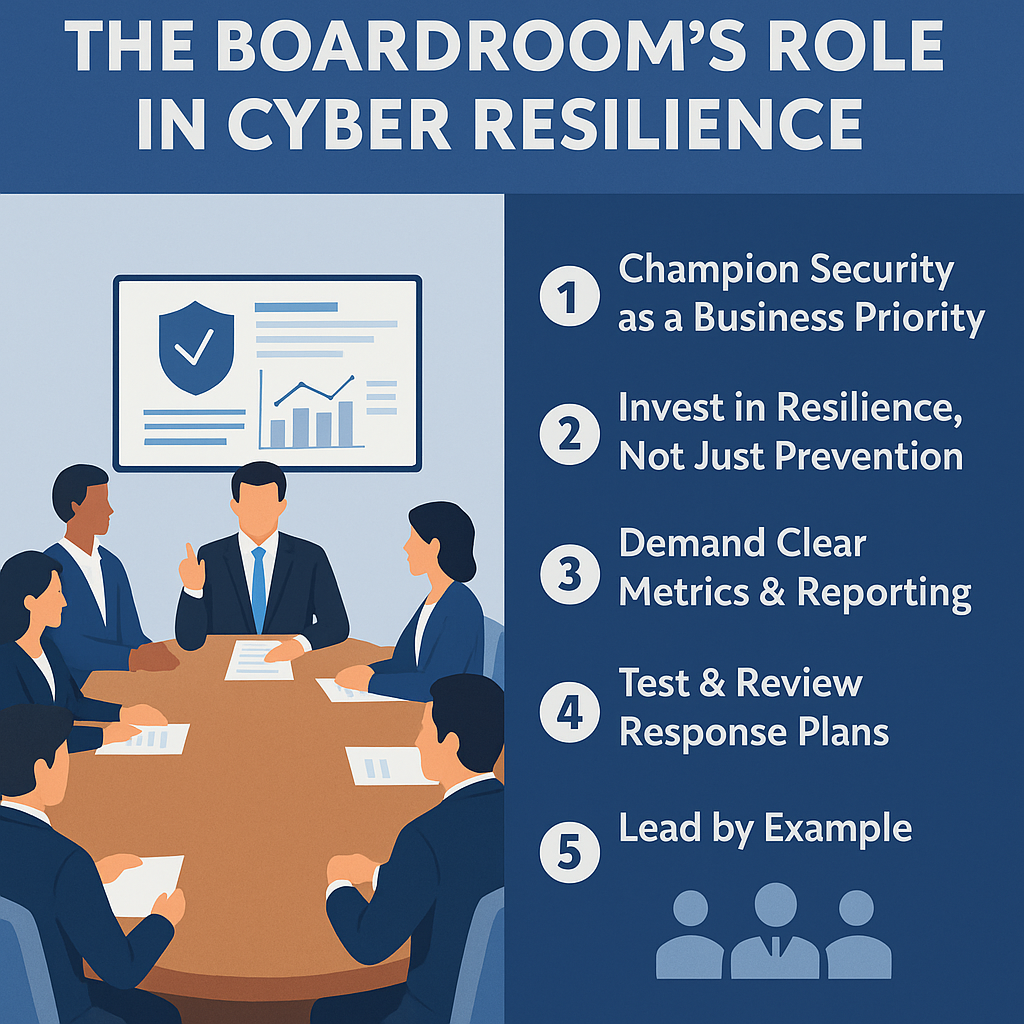
In this edition of Strengthening Security from the Top, we focus on how the boardroom can set the tone for an organization’s cyber resilience. While technical safeguards are essential, they cannot succeed without leadership that prioritizes preparedness, continuity, and trust.